If you've ever tried a friend's "miracle" acne product and ended up with more redness and irritation than clear skin, you already know the truth: acne treatment isn't one-size-fits-all. What clears breakouts on oily skin can strip and inflame sensitive skin. What works on combination skin might not touch the deeper cystic breakouts common with hormonal or oily skin types. At SkinLab, every acne treatment plan starts with identifying your actual skin type, because that single factor changes everything about what should come next.
Why Skin Type Changes the Acne Treatment Approach
Acne itself has multiple root causes, excess oil production, clogged pores, bacteria, inflammation, and hormonal fluctuations, but how these factors show up depends heavily on your skin type. Treating oily, congested skin the same way you'd treat sensitive, reactive skin often backfires: over-drying oily skin can trigger more oil production, while aggressive actives on sensitive skin can compromise the skin barrier and worsen breakouts.
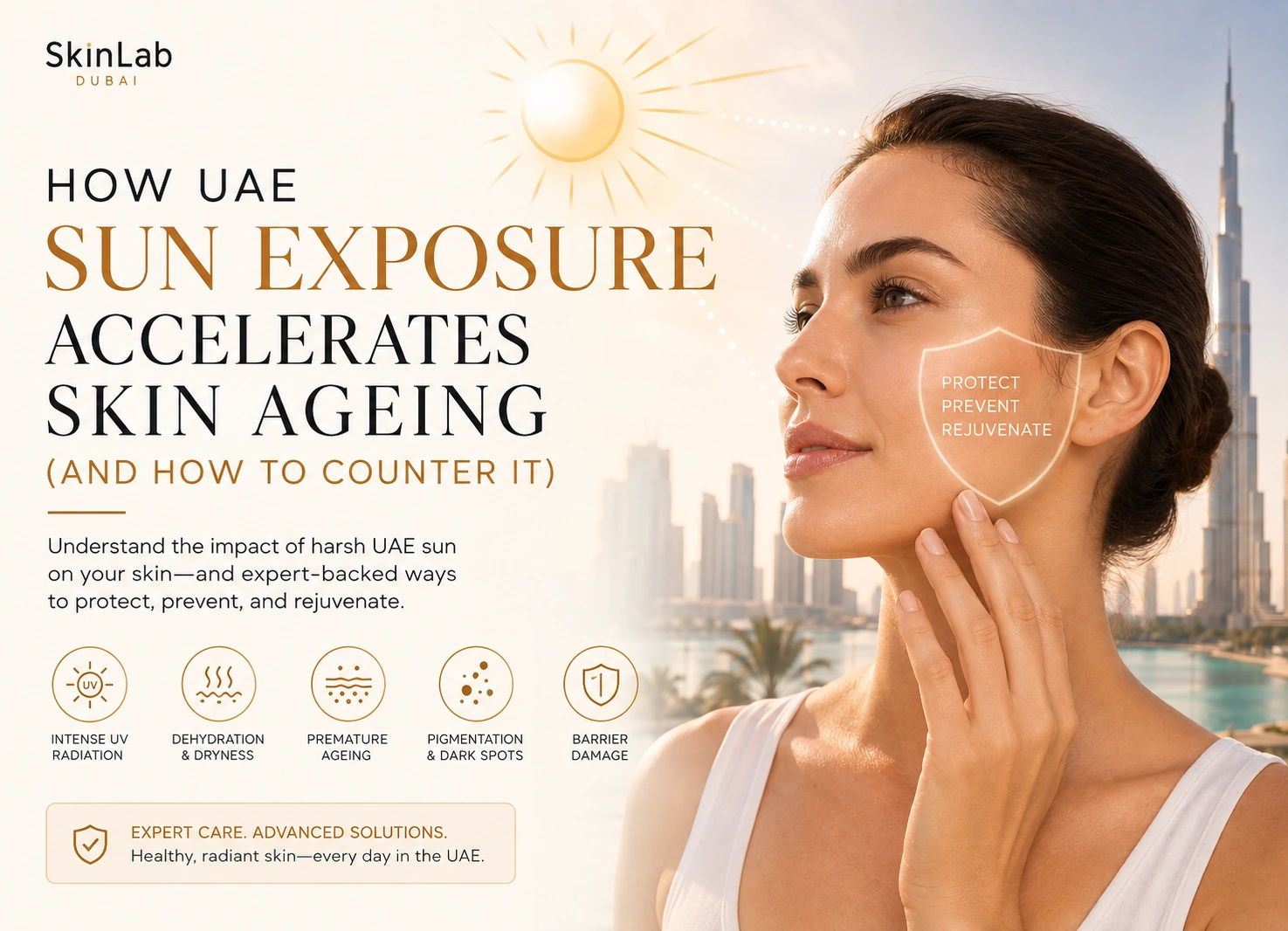
This is especially relevant in the UAE, where heat, humidity, and constant air conditioning already stress the skin barrier before any product or treatment enters the picture.
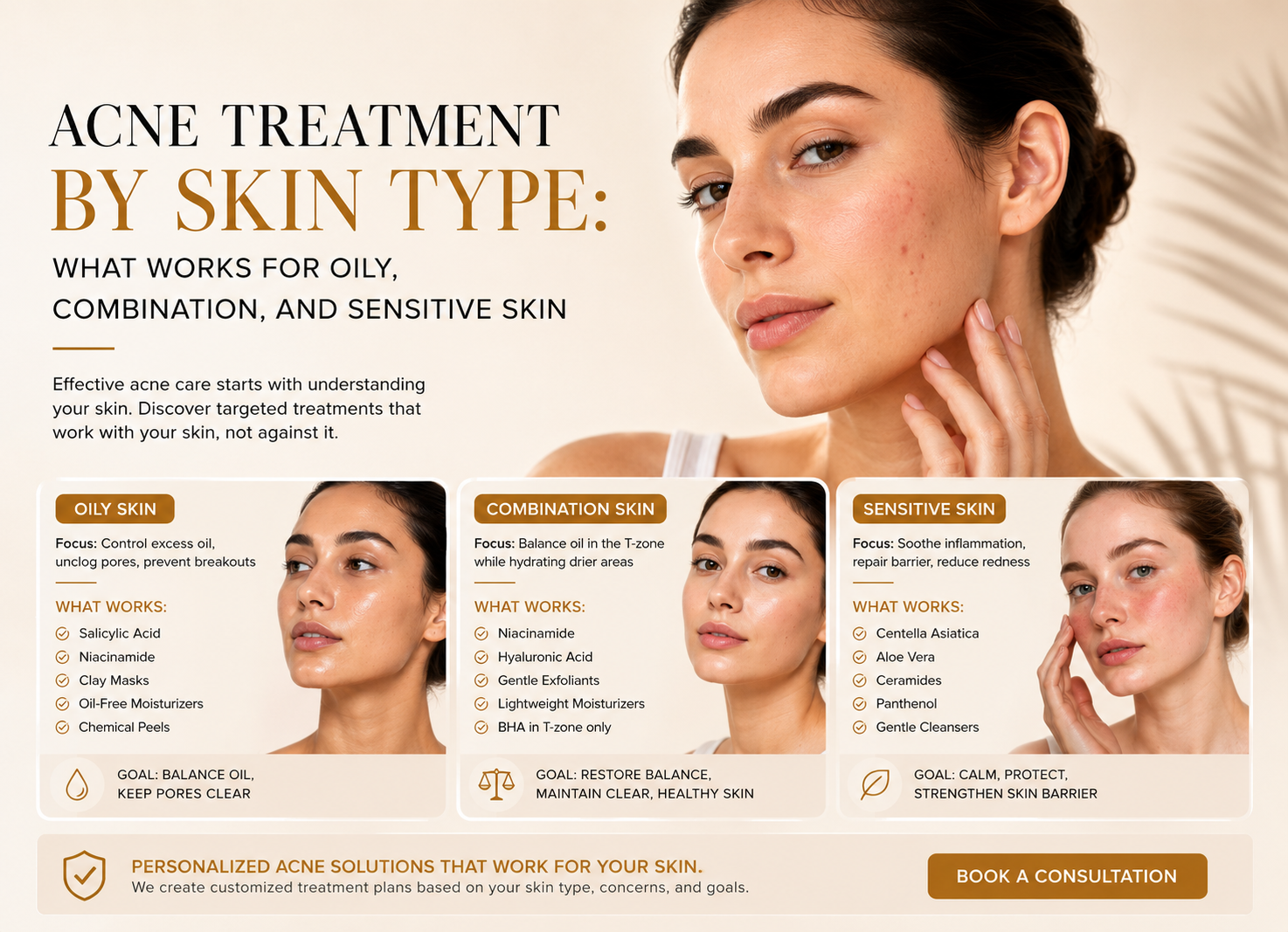
Acne Treatment for Oily Skin
Oily skin tends to produce excess sebum, leading to clogged pores, blackheads, and recurring breakouts, often concentrated in the T-zone. The goal here isn't to eliminate oil entirely (that backfires) but to regulate production and keep pores clear.
What works:
- Salicylic acid-based peels, which penetrate oil-clogged pores and dissolve debris at a deeper level than surface exfoliants
- Medical-grade facials that combine deep pore cleansing with oil-regulating actives
- Professional peels performed on a consistent schedule to prevent buildup between sessions
- Non-comedogenic hydration, since oily skin still needs moisture, skipping it often increases oil production as skin tries to compensate
At SkinLab, oily and acne-prone clients typically benefit most from a combination of acne treatments and professional peels, scheduled to manage breakouts proactively rather than reactively.
Acne Treatment for Combination Skin
Combination skin is arguably the trickiest to treat because it behaves like two different skin types at once, oily in the T-zone, often dry or normal on the cheeks. Treating the whole face uniformly usually over-treats one area while under-treating the other.
What works:
- Zone-specific treatment, targeting the T-zone more aggressively while keeping cheeks hydrated
- Signature medi-facials, customized to address multiple concerns in a single session
- Lighter peel concentrations, applied evenly but paired with barrier support for drier areas
- Balanced, non-stripping cleansers and actives that won't over-dry the cheeks while treating the oilier zones
SkinLab's signature medi-facials are especially suited to combination skin, since each session is tailored rather than applied as a blanket treatment across the whole face.
Acne Treatment for Sensitive Skin
Sensitive, reactive skin needs the most careful approach. Breakouts here are often accompanied by redness, stinging, or irritation from products that would be perfectly fine on oilier skin types. Aggressive acne treatments can actually worsen sensitive skin by damaging the barrier further, leading to a frustrating cycle of breakouts and inflammation.
What works:
- Lower-strength, buffered peels that treat acne without over-exfoliating
- Barrier-repair focused facials, addressing both breakouts and the dehydration or dryness that often accompanies sensitive skin
- Calming, anti-inflammatory ingredients like azelaic acid, which treats acne while reducing redness
- Longer intervals between active treatments, giving skin time to recover and rebuild barrier function
Since sensitive skin often overlaps with dehydration, addressing both together matters. SkinLab's dehydrated and dry skin treatments are often paired with gentler acne protocols for clients whose skin reacts easily.
When Pigmentation Enters the Picture
Regardless of skin type, one frustration is universal: the dark marks and pigmentation acne can leave behind, especially in the UAE's high-UV climate, where post-acne marks tend to linger longer and darken further without sun protection. If breakouts are leaving marks behind, treating both the active acne and the resulting pigmentation and acne marks together produces faster, more even results than treating them separately.
Building the Right Plan for Your Skin
The most common mistake people make with acne treatment isn't choosing the wrong product, it's assuming their skin type is fixed rather than getting it properly assessed. Skin type can shift with seasons, hormones, stress, and even skincare habits, which is why a professional consultation matters more than following generic advice.
At SkinLab, every acne treatment plan begins with a proper skin assessment to determine whether you're dealing with oily, combination, sensitive, or a hybrid skin type, and to identify what's actually driving your breakouts. From there, treatments are combined and paced specifically for your skin, rather than applying the same protocol to every client who walks in.
Not sure what's actually causing your breakouts? Book a skin consultation with SkinLab and get a treatment plan built around your actual skin type, not guesswork.